
A picture is easier to arrive with than a category. A terrace above the water. A garden with room for family. A lot on a hillside with a house they have not drawn yet.
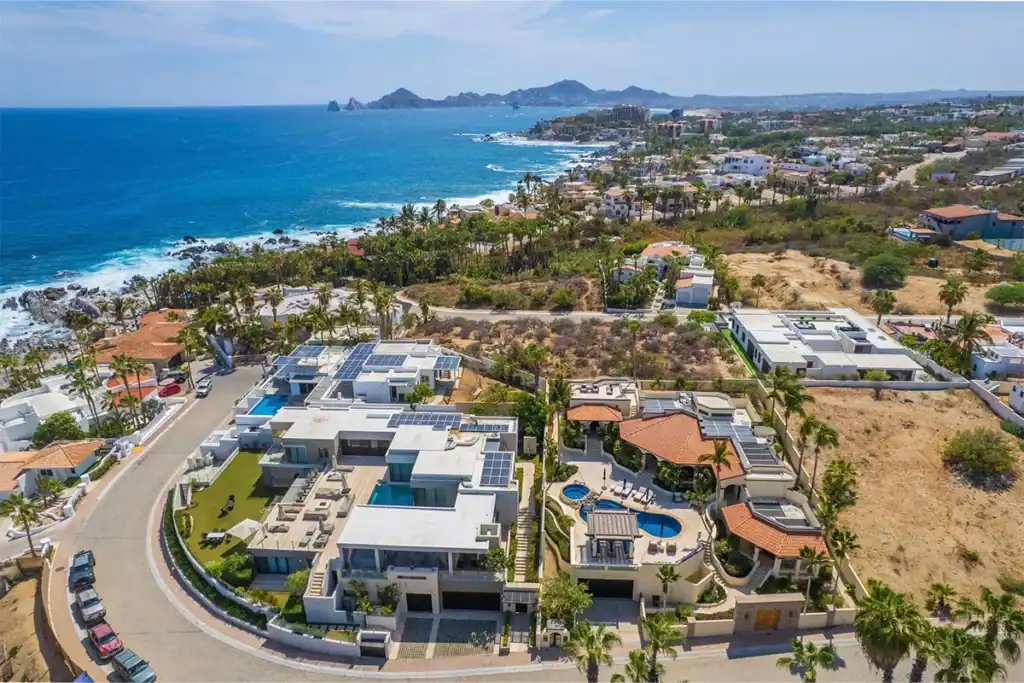
The three lead to genuinely different ownership, and not only in the obvious ways. One of the differences is how each is taxed, and it is rarely set out before the choice is made.
This page sets out what each option actually involves, starting with that.
Start with the tax difference, because it decides the land question
Predial, the annual property tax, is not one rate. The municipality sets different rates according to how a property is used, and vacant land is treated very differently from a home.
For a built property, whether condo or villa, predial runs at approximately 0.1 to 0.3 percent of assessed value per year as of October 2026. Applied to a cadastral value that generally sits below market, that produces a modest annual holding cost.
Vacant land is charged at a materially higher rate, and unlike a home’s rate it escalates every year until you build.
That is a deliberate policy. The municipality is charging you to leave land empty, and increasing the charge the longer you do it. A home’s predial does not climb that way, though it can still move if the municipality revises cadastral values. A lot’s is a rising one.
So the honest framing for the land option is this: a lot is not a cost-free thing to hold, whatever it costs to buy. If your build is three or four years out, the carrying cost is rising each of those years while you are paying for a design, permits and a builder.
Ask the treasury what the lot is paying today, and how the escalation applies to it. That is a matter of record and it belongs in your model before you buy, not after.
These ranges reflect our latest information and can change. Ask us to check the running costs on anything you are comparing. We can help you obtain the current predial and cadastral value on a specific condo, villa or lot, through the treasury and the notaries we work with, so you are comparing real numbers rather than ranges.
Our predial guide goes into how the charge is worked out and how to find what a specific property pays.
The condo
What it gives you. The lowest maintenance burden of the three, and usually the easiest to leave empty for months at a time. Someone else is responsible for the roof, the pool plant and the landscaping. For a buyer who visits for part of the year, that is a practical advantage worth weighing against the dues.
What it costs you. Control, and a recurring fee. Community dues are set by the development, vary enormously and are not something we can quote you. They are also not fixed for life: a development facing a major repair can raise them or levy a special assessment.
What to check.
- The current dues, what they cover, and their history over the last five years.
- Whether a special assessment is anticipated, and what reserves exist.
- The rules on renting, and specifically what a short-term renter may and may not use. Restrictions in Los Cabos communities are often not a flat ban and are often about access to amenities, which is what changes the nightly rate.
- Who manages the building, and whether the developer still controls the owners’ association.
The villa
What it gives you. Space, privacy, land, and the freedom to change things. If you intend to spend extended periods here, or to bring family, it is the option that stops feeling like a hotel.
What it costs you. You own every system in it. Pool, air conditioning, water storage, landscaping and security are yours, and in this climate they are not theoretical obligations. A house left closed for four months is a house that needs someone attending to it.
What to check.
- Water. How it arrives, whether there is storage, and what happens in a shortage.
- Power, and what the property’s actual consumption looks like across a summer rather than a winter.
- Whether the property sits inside a gated community with its own dues, which many villas do, or stands alone.
- Who will look after it when you are not here, and what that costs.
The land
What it gives you. The house you actually want, in the position you actually want, at a build cost you control rather than a developer’s margin.
What it costs you. Time, project management from a distance, and the escalating predial above.
What to check.
- Services. Whether power, water and drainage reach the boundary, and what it costs to bring them if they do not. This is the variable that moves a land budget most, and it is the one a lot listing says least about.
- Access. Whether the road to the lot is public, private or shared, and who maintains it.
- What may be built: height limits, setbacks, coverage, and any community design rules.
- The predial position today, and what the escalation means over your build timeline.
- Whether the seller’s predial is current, because a certificate that it is paid is required before any sale can be authorized.
We are not going to publish a build cost per square foot. Figures circulate, they vary by specification more than by anything else, and a number here would be guessed rather than sourced. Ask two builders for a real quotation on a real design.
Our exclusive lot listings show what is currently available.
Three things that are the same whichever you choose
The trust. A foreign buyer in Los Cabos will normally hold through a fideicomiso whatever the property type, because the property sits in what is known as the restricted zone. That applies to undeveloped land as much as to a built home, and the notario confirms it for a specific parcel.
The tax base. The acquisition tax is charged on the highest of the price, the official value and a commercial appraisal, for all three.
The predial certificate. Article 34 of the municipal revenue law stops a notario authorizing a transfer until a certificate shows the predial is up to date, so an arrears position has to be resolved before a transfer completes. Who settles it is a matter for the contract, and your notario will tell you where it lands.
The questions that actually decide it
How many weeks a year will you be here? The fewer it is, the more the condo’s low maintenance burden matters, because someone else is looking after the building while you are not in it. The more it is, the more the villa’s space and control matter. There is no threshold we can give you honestly, and anyone offering one is guessing, but it is the first question to answer because the others follow from it.
Do you want to rent it out? If yes, the community’s rules matter more than the property does, and the predial rate changes too.
Are you willing to run a project from another country? That is the land question, and it is not really about money.
What happens when you are not here? Answer this for each option before you choose between them. It is the question that changes the answer most often.
What we cannot tell you
Prices. Our community pages carry current inventory and price ranges, and they are a better source than anything we could write here.
Community dues. Development-specific, and they change.
Build costs. Specification-dependent, and we have no sourced figure.
Rental returns. We hold no verified figures and we are not going to publish an estimate.
Comparing two or three specific places? The dues history and the current predial position on each of them are the two running costs that differ most between a condo, a villa and a lot, and both are a matter of record rather than estimation.
Frequently Asked Questions
Is property tax different for land in Los Cabos?
Yes, substantially. Vacant lots are charged at a materially higher rate than built property, and that rate escalates each year until you build, which a home’s rate does not. Ask the municipal treasury what a specific lot is paying now and how the escalation applies to it.
Is a condo or a villa better for renting out?
Neither by default. What decides it is the community’s rules on short-term renting and what a renter may use, and the predial rate that applies, since the municipality sets different rates according to how a property is used, and the treasury can tell you which applies to a specific property.
Do I need a fideicomiso to buy land?
A foreign buyer in Los Cabos will normally hold through a bank trust regardless of whether the property is built on, because the property sits in what is known as the restricted zone. The notario confirms it for a specific parcel.
What are community dues in Los Cabos?
They are set by each development and vary too widely for a published figure to be useful. Ask for the current amount, what it covers, its history over five years, and whether any special assessment is anticipated.
How much does it cost to build in Los Cabos?
It depends far more on specification than on location, and we have no sourced figure we are prepared to publish. Get quotations from two builders against a real design.
What is the biggest cost people underestimate on a lot?
Bringing services to the boundary, where power, water or drainage do not already reach it. Establish this before you commit, not after.
Does the seller’s unpaid property tax become mine?
A certificate that predial is paid is required before a sale is authorized, so an arrears position has to be resolved before a transfer completes. Your notario will confirm who settles it in your case.
If you take one thing from this page, it is that the three options differ most in what they cost you to hold rather than in what they cost to buy. Ask us for the dues history and the current predial position on anything you are comparing, so the holding cost is a figure rather than an assumption.