
Buying pre-construction means committing to something that does not exist yet, on a contract written entirely by the person selling it to you.
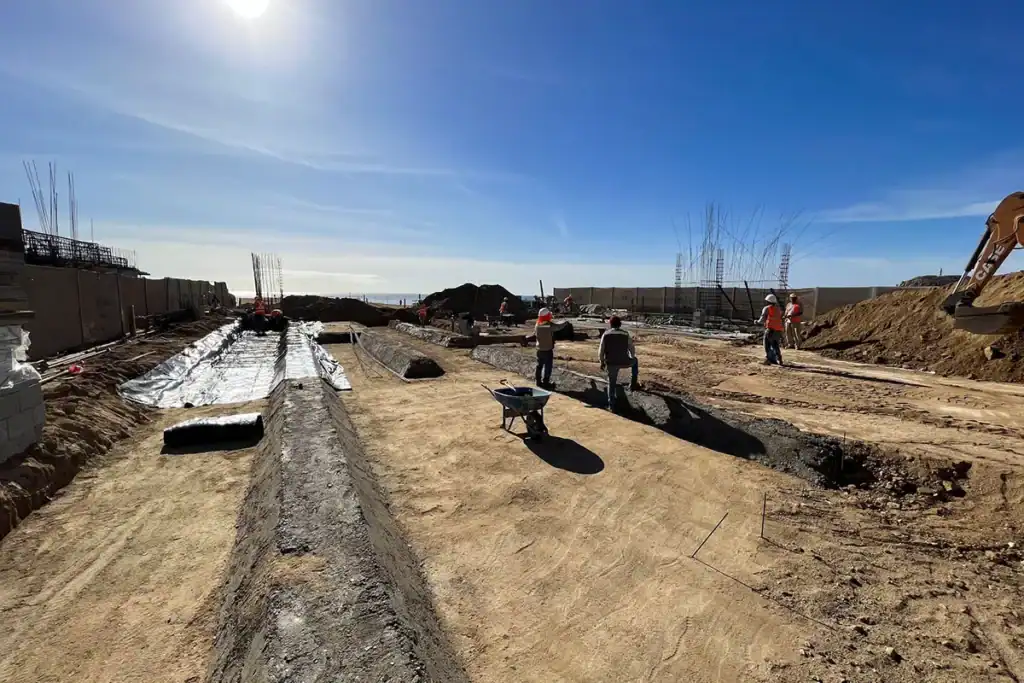
That is not an argument against it. A great deal of new inventory in Los Cabos is sold this way, and buying early is how some buyers secure a unit or a position that is unavailable later.
It does mean the contract carries more of the risk than it would on a finished home, because almost everything you are relying on is a promise rather than something you can inspect.
There is a published Mexican standard that sets floors on what that contract may do to you. It is called NOM-247-SE-2021, it was issued in the Diario Oficial de la Federación on March 22, 2022, and it applies squarely to developer sales, and you can read it in full at dof.gob.mx. It is rarely cited in material written for buyers.
This page sets out what it gives you, and what to ask before you sign.
Why this standard definitely applies to you
The standard states its own scope at numeral 1. It applies “únicamente a los proveedores que sean fraccionadores, constructores, promotores y demás personas que intervengan en la asesoría y venta al público de inmuebles destinados a casa habitación”: only to providers who are subdividers, builders, promoters and others involved in advising on and selling housing to the public.
If you are buying from a developer, that is precisely who you are buying from.
Note the second half of that scope as well as the first: the standard is written for housing. So it governs developer and new-build sales. We do not apply it to a resale between two private owners, where what protects you is your own contract and your own inspection. On a pre-construction purchase from a developer, you are squarely inside the scope and the provisions below apply.
BHHS Baja publishes the buyer’s Bill of Rights that this standard requires.
Your contract must be in Spanish, and the Spanish is what governs
Start here, because it decides how much the rest of this page is worth to you.
First, one term. An adhesion contract is a standard-form contract presented on a take-it-or-leave-it basis, which is what a developer contract almost always is. Numeral 6 of the standard governs those contracts, and everything in this section and the next applies to them.
At numeral 6 the standard requires it: “Los contratos de adhesión de compraventa de bien inmueble destinado a casa habitación deben estar escritos en idioma español, sin perjuicio de que además puedan ser expresados en otro idioma, en caso de diferencias en el texto o redacción, se estará a lo manifestado en el idioma español.”
These contracts must be written in Spanish. They may also be expressed in another language, and where the two texts differ, the Spanish is what applies.
So if you are reading your contract in English, the version that governs is one you have not read. On a finished home that is a risk. On a pre-construction purchase, where the contract is doing almost all the work for two or three years, it is the central risk.
Your contract must give you five business days to cancel, and must say what happens to your money
Numeral 6 also sets out the minimum terms an adhesion contract must contain.
One of those required terms is the right to cancel within five business days of signing. The clause does not stop there, and the rest of it is the part worth reading.
It also requires the contract to establish the provider’s obligation to return the amounts you have handed over, where applicable, less any duly provable operating costs incurred in that period where the parties have stipulated for them. That repayment is due within five to fifteen business days of the provider being notified of the cancellation in writing.
So the cancellation right comes with a repayment obligation attached, and the written notice is what starts the clock. Give any cancellation in writing and keep proof of when you sent it.
This reflects our latest information and can change. Ask us to check the cancellation and warranty terms in a developer contract you are considering, against what the standard requires.
Two things to check in your own contract rather than assume. Whether it carries the cancellation term at all, since the standard requires it to. And what it says about deductions, because the deduction for provable operating costs applies where the parties have stipulated for it, so the wording in front of you decides how much of it bites.
The warranty floor, and it cannot be signed away
The standard sets three minimum warranty periods on a new build: the longest for structural matters, a shorter one for waterproofing, and a shorter one again for other elements. The periods themselves are set in the standard, and the notario or an attorney will give you the current ones.
Then it adds four words that matter more than any of the three: “Estos plazos son irrenunciables.” These periods cannot be waived.
So a contract offering less than the standard’s periods is offering less than a floor the standard says cannot be given up, which is worth raising in writing before you sign rather than after.
Ask two things rather than one: what period your contract gives for each of the three, and what the standard’s minimum is for each. The second question is the one that makes the first answer mean something, and whoever is selling to you should be able to answer both.
The notario is your choice, and the notario is not your advocate
Two things about the notario matter on a developer sale, and they pull in different directions.
The choice is yours. At numeral 9.1 the consumer “en todo momento tendrá el derecho de elegir y decidir al notario público”, has at all times the right to choose and decide the notario. The clause allows either party to propose one where there is no mortgage, with your freedom to designate preserved, and on a mortgage-financed purchase the choice runs from a register. So a developer proposing a notario is expressly permitted and is not the same as the developer deciding. The two are easy to confuse when a name arrives already attached to a closing date.
But choosing them does not make them yours. The same standard requires notarios to act impartially and to give the advice appropriate to each of the parties who come before them. Impartial is not the same as acting for you, and on a pre-construction purchase, where the other side drafted the contract, that distinction is the whole reason the last section of this page exists. Our guide to whether you need your own lawyer goes into what the notario is and is not obliged to do.
One further duty is worth knowing, because it is about your money. Numeral 9.1 requires the developer to be transparent and truthful about how the escrituración, the formal transfer of title, will be conducted, how the notario was selected, and the outlays other than the purchase price. And at numeral 9.2 the notario must inform and explain in good time how the costs of the deed are made up. If what you have been given is a single bundled figure, those two obligations are what you point at.
What to ask before you sign
Twelve questions. Ask them in writing, and keep the answers.
On the money:
- What is the full payment schedule, and what triggers each payment?
- If I cancel within the five business days, what does the contract say about returning what I have paid, and what deductions does it allow?
- Who holds my payments between now and delivery?
- What is the total price, and which costs sit outside it?
On the building:
- What exactly is included in the unit, and at what specification?
- What warranty periods does the contract state, for structural, waterproofing and other elements?
- Who carries out warranty work, and how do I make a claim?
On delivery:
- What is the contractual delivery date, as distinct from the marketing estimate?
- What happens if delivery is late, and is anything owed to me?
- What condition must the unit be in before I am required to complete?
On the paperwork:
- Which notario will act, and was that my choice or a proposal I accepted?
- Can I have the deed costs broken down rather than bundled, and can I see the Spanish text of everything I am signing?
If a question on this list produces a verbal reassurance rather than a written answer, that is itself information.
Our Buyer’s Guide covers the rest of the purchase process.
Three timing traps
The appraisal expires. A commercial appraisal for tax purposes is valid for a limited period, roughly three months, and against a purchase completing years after signing that matters a great deal. Ask your notario when in the process it should be commissioned so that it is still valid at signing, because one done too early has to be redone and paid for again. Our guide to the avalúo goes into which of the three values the tax is actually based on.
The trust permit takes time. A foreign buyer in Los Cabos will normally hold through a fideicomiso, a bank trust in which a Mexican bank holds title while you hold the rights to use, rent and sell, because the property sits in what is known as the restricted zone. That requires a federal permit. Ask when the permit application will start, because it runs on its own clock rather than the developer’s.
Delivery dates move. We are not going to tell you by how much, because we hold no data on it, and a general figure would be a guess dressed up as a benchmark. What we can tell you is to get the contractual date in writing, and to understand what the contract says happens when it passes.
If you are buying land rather than a unit
One cost catches people who buy a lot and build later.
Predial, the annual property tax, charges vacant lots at a higher rate than built homes, and that rate increases over time. It is a deliberate incentive to build rather than hold.
So the carrying cost of a lot is not static. If your build is two or three years out, budget for a bill that grows each year rather than one that stays where it started. Our guide to predial goes into how the charge is worked out and how to find what a specific property pays.
Ask what a specific lot is paying now rather than what the rate is, because the bill is what you will budget against.
What we cannot tell you
Three things, and we would rather be straight about them.
Whether a particular developer will deliver. We hold no verifiable track-record data and we are not going to imply one from reputation.
Whether your deposit is protected between signing and delivery. The standard addresses what happens on a cancellation in the first five business days. It does not follow that money paid over the following two years is held in the same way, and we hold nothing verified on how pre-construction payments are held here. That is question 3 above, and it is question 3 for a reason.
What your remedies are if things go wrong. That is a question for a Mexican attorney reading your actual contract, and it is the single strongest argument for having one on a pre-construction purchase.
Frequently Asked Questions
Can I cancel a pre-construction contract in Mexico?
NOM-247-SE-2021 requires an adhesion contract to establish the right to cancel within five business days of signing, and most developer contracts are adhesion contracts. Check that your contract carries the term, because the standard requires it to.
If I cancel, do I get my deposit back?
The same required term obliges the provider to return what you have paid, less any duly provable operating costs incurred in that period where the parties have stipulated for them, within five to fifteen business days of written notice of the cancellation. So give any cancellation in writing, and read what your own contract says about deductions.
What warranty comes with a new build?
The standard sets minimum periods, longest for structural matters, shorter for waterproofing, and shorter again for other elements, and states that these periods are irrenunciables, meaning they cannot be waived. Check the periods in your own contract against them.
Can a developer ask me to waive the warranty?
The standard states that these periods cannot be waived. A contract offering less sits below a floor the standard says cannot be given up, and that is worth raising in writing before you sign.
Does the standard apply to my purchase?
If you are buying from a developer, builder or promoter selling housing to the public, yes. Numeral 1 defines the scope in those terms, and the property has to be residential housing. We do not apply it to a resale between two private owners.
Does my contract have to be in Spanish?
If it is an adhesion contract, which a developer contract almost always is, yes. Numeral 6 requires those contracts to be written in Spanish, permits another language alongside, and provides that where the two texts differ the Spanish is what applies. An English version is a convenience, not the agreement.
Who chooses the notario on a developer sale?
Numeral 9.1 gives the consumer the right to choose, with two qualifications. On a mortgage-financed purchase you may choose, on the provider’s proposal, a notario on the register kept by the relevant national housing bodies and lending institutions. Without a mortgage, either party may propose one, with your freedom to designate preserved.
What happens if delivery is late?
That depends on what your contract says, and we cannot answer it in general terms. Get the contractual delivery date and the consequences of missing it in writing, and have a Mexican attorney read the clause before you sign.
If you take one thing from this page, it is that a pre-construction purchase is a contract purchase, and the Spanish text of that contract is the thing that governs for the next two or three years. Ask us for an introduction to the independent attorneys we work with before you sign, and we will go through the twelve questions above with you so you know which ones to put to them.